

Table Of Contents
“Hip dysplasia dogs”. No dog owner wants to hear these 3 dreaded words. Nearly 16% of dogs are affected by hip dysplasia, so if you own a large or giant dog breed, chances are you may be faced with treating and preventing it.
This condition primarily affects large and giant breed dogs. A large dog weighs over 50 lbs and is about 24 inches, or two feet high. Breeds in this category include German Shepherd Dogs, Bernese Mountain Dogs, and Great Pyrenees, or any mix thereof, just to name a few.
Hip dysplasia may not always be completely avoidable. However, all is not lost! You can protect your lovable pooch and help make sure they live an active, happy life, even if they develop this condition. Let’s take a look at how hip dysplasia in dogs can happen and what you can do to prevent and treat it for your pup.
Key Takeaways:
-
Hip dysplasia develops during growth, not overnight. Joint laxity in puppyhood can progress through subluxation, cartilage wear, and eventually osteoarthritis if left unmanaged. Early detection and intervention offer the best outcomes.
-
Multiple factors drive the condition, including genetics, rapid growth, high-impact exercise, and obesity, meaning responsible breeding, controlled nutrition, and appropriate activity levels are all part of an effective prevention strategy.
-
Proactive joint supplementation matters. TRI-ACTA and TRI-ACTA H.A. address both the root cause (cartilage degeneration) and symptoms (inflammation and pain) using 100% active, pharmaceutical-grade ingredients, unlike symptom-only supplements such as fish oil or CBD.
-
Hip dysplasia is manageable, not a death sentence. A range of non-surgical options, including weight reduction, physical therapy, NSAIDs, and supplementation, can meaningfully improve your dog's comfort and mobility, with surgery reserved for severe cases.
What is Hip Dysplasia in Dogs?

Hip dysplasia is a deformity of the hip that typically occurs during growth. While larger dogs have more of a genetic predisposition for this condition due to their size, it can also develop in smaller dogs such as French Bulldogs and Pugs.
The hip joint consists of a ball and a socket. Normally, as your puppy grows, these are supposed to grow uniformly for the hip joint to function properly. The ball fits perfectly into the socket, allowing the dog’s legs and hips to move as they should.
However, when hip dysplasia occurs, the ball and socket do not form properly, with one being disproportionate to the other. This causes looseness in the joint, in varying degrees, according to the severity of the condition.
Some dogs begin to display symptoms of hip dysplasia as young as 4-6 months old, but the most common age of onset is one to two years old.
Signs that your dog may be affected by hip dysplasia include:
-
A decrease in physical activity
-
Reluctance to get up or move from a sitting or lying down position
-
Reluctance when it comes to climbing onto the couch, going upstairs, or jumping into your car
-
Appearing wobbly or unsteady in their walk
-
In more severe cases, hearing grating near the hip joint
-
Showing general signs of pain and discomfort
-
Asymmetrical hips (sign of advanced hip dysplasia)
In certain other cases, you may not see evidence of this condition until they’re older and they develop arthritis as a result.
Causes of Hip Dysplasia in Dogs
Hip dysplasia in dogs is a multifactorial condition, meaning it does not develop from a single cause. Genetics, growth patterns, biomechanics, activity level, and body weight all interact to influence how the hip joint forms and functions over time.
Understanding these contributing factors is critical—not just for treatment, but for prevention and long-term joint protection.
1. Accelerated Growth
Large and giant breeds such as Golden Retrievers, German Shepherds, Saint Bernards, and Mastiffs are particularly prone to hip dysplasia due to their rapid growth rates during puppyhood.
While large mixed breeds statistically show slightly lower incidence rates than purebreds, they are not exempt. Any dog experiencing accelerated skeletal development can be at risk.
During early development, bones may grow faster than the supporting soft tissues—muscles, ligaments, tendons, and joint capsules—can adapt. The hip joint is a ball-and-socket structure, where the femoral head (ball) must fit securely within the acetabulum (socket). When supporting tissues lag behind skeletal growth, joint laxity (looseness) can occur.
This looseness sets the stage for two major structural problems:
Deformities
When bones grow rapidly without optimal alignment and stabilization, the femoral head and socket may not form congruently. Instead of sitting snugly within the socket, the femoral head may partially slip or shift during movement. Over time, this abnormal motion causes uneven wear, cartilage damage, and eventual degenerative joint disease.
Reduced Structural Support
Supporting muscles and tendons may not develop adequate strength quickly enough to stabilize the joint. In addition, rapid weight gain during growth places additional mechanical load on an already unstable joint. The result is compounded stress on cartilage and joint surfaces—accelerating the progression of dysplasia.
Nutrition during growth also plays a role. Excess calories, inappropriate calcium-to-phosphorus ratios, and over-supplementation in large-breed puppies can worsen skeletal imbalance. Controlled growth—not rapid growth—is the goal in at-risk breeds.
2. Types of Exercise
Exercise is essential for healthy development. However, the type, intensity, and timing of activity matter significantly—especially in large-breed puppies and young dogs.
Many larger breeds excel in physically demanding activities such as:
-
Golden Retrievers and Labradors participating in water sports or hunting
-
Huskies and Malamutes pulling sleds
-
Australian Shepherds competing in agility trials
These activities require explosive movement, rapid directional changes, jumping, and high-impact landings. While athletic training strengthens muscles, excessive or repetitive high-impact stress can aggravate a hip joint that is already mildly unstable.
Quick pivots, uneven terrain, repetitive jumping, and sprinting increase shear forces across the hip joint. In a well-formed joint, this is tolerated. In a joint with subtle laxity, it can worsen instability and cartilage wear.
If hip dysplasia is present or developing, you may notice:
-
Reluctance to jump or climb stairs
-
Hesitation before running
-
Shortened stride length
-
“Bunny hopping” gait
-
Avoidance of previously enjoyed activities
Even non-competitive dogs can overexert themselves. For example, Labradors are notorious for endless games of fetch. While exercise is beneficial, repeated high-impact activity without adequate rest may increase joint strain.
For at-risk breeds, controlled low-impact exercise—such as leash walks and swimming—is generally safer than repetitive jumping or agility during growth phases.
3. Obesity
A survey from the Association for Pet Obesity Prevention found that approximately 59% of dogs are classified as overweight or obese in the United States. This statistic is significant because excess body weight is one of the most modifiable risk factors for hip dysplasia progression.
Obesity affects more than outward appearance. Excess fat tissue is metabolically active—it produces inflammatory cytokines that contribute to systemic inflammation. This inflammatory burden can accelerate joint degeneration.
From a mechanical standpoint, extra weight dramatically increases joint load. The hip joint must absorb and distribute force with every step. Even a modest increase in body weight significantly amplifies pressure on cartilage surfaces.
Over time, this leads to:
-
Faster cartilage breakdown
-
Increased joint instability
-
Greater pain and stiffness
-
Earlier onset of osteoarthritis
Additionally, excess fat can infiltrate muscle tissue, reducing strength and stability around the hip. Weak musculature further reduces joint support, compounding the problem.
Maintaining a healthy body condition score is one of the most effective ways to slow the progression of hip dysplasia. Weight management reduces mechanical stress, lowers systemic inflammation, and improves overall mobility.
How to Prevent Hip Dysplasia in Dogs

Hip dysplasia has a strong genetic component, but genetics alone do not determine outcome. Growth rate, nutrition, exercise habits, and body weight all influence how the hip joint develops and functions over time.
While you cannot eliminate genetic risk entirely, you can significantly reduce the likelihood of severe progression by managing the factors within your control.
Choose Responsible Breeders
If you are purchasing a puppy—especially a large or giant breed—selecting a responsible breeder is one of the most important steps you can take to reduce the risk of hip dysplasia.
Reputable breeders do far more than simply have their dogs “vet-checked.” They screen breeding dogs using established orthopedic evaluation programs and maintain public health records to demonstrate transparency and long-term commitment to breed improvement.
To meaningfully minimize risk, both parent dogs should have certified, passing hip scores through recognized programs such as:
A passing OFA score should be rated Excellent, Good, or Fair—not simply described as “cleared” or “healthy.” PennHIP provides a distraction index measurement that evaluates hip laxity and compares it to breed averages.
Key Actions to Take
1. Verify OFA or PennHIP Clearances
Ask for the official registration numbers for both parents and independently verify them through the OFA database. Results should be publicly searchable and transparent.
2. Check Pedigrees and Extended Family Health
Responsible breeders look beyond just the sire and dam. They track health data across:
-
Grandparents
-
Siblings
-
Previous litters
Hip dysplasia risk is influenced by multigenerational trends. A breeder who monitors long-term outcomes demonstrates genuine commitment to health improvement.
3. Confirm Dogs Are Mature Before Breeding
Final OFA certification cannot be granted until a dog is at least 2 years old. Breeding dogs younger than this increases uncertainty regarding hip stability.
4. Understand Genetic and Environmental Factors
Even with responsible breeding, the risk of hip dysplasia can’t be reduced to zero. Genetic screening is a powerful tool for assessing a dog's risk of developing hip dysplasia, but environmental factors still play a role.
Responsible breeders will educate new owners about:
-
Controlled growth in large-breed puppies
-
Appropriate large-breed nutrition
-
Avoiding over-exercising during growth phases
If a breeder discusses both genetics and environmental management, that is a strong positive indicator.
Interview the Breeder
A reputable breeder will:
-
Ask you detailed questions about your home and lifestyle
-
Allow you to visit the facility
-
Show where puppies are raised
-
Provide written health guarantees
-
Offer ongoing support after adoption
Ethical breeding is selective and intentional—not transactional.
Red Flags to Avoid
Be cautious if you encounter breeders who:
-
Claim their lines are “too healthy” to require hip testing
-
Breed dogs under 2 years of age
-
Cannot provide verifiable OFA or PennHIP documentation
-
Sell puppies exclusively through pet stores or online platforms without direct interaction
-
Avoid allowing facility visits
Transparency is essential. If documentation is unavailable or verification is discouraged, that’s a warning sign.
Choosing a responsible breeder doesn’t eliminate risk entirely, but it significantly improves the odds of healthier hip development. When combined with proper growth management, nutrition, exercise moderation, and proactive joint support, it forms the foundation of effective hip dysplasia prevention.
Feed Balanced Large-Breed Puppy Diet
Large-breed puppies have unique nutritional requirements. Rapid, uncontrolled growth is one of the biggest risk factors for joint instability.
High-quality large-breed puppy diets are specifically formulated to:
-
Support steady (not accelerated) growth
-
Maintain appropriate calcium-to-phosphorus ratios
-
Provide adequate—but not excessive—calories
-
Encourage proper muscle and bone development
Breed-specific formulas can be helpful, but what matters most is that the diet is designed for controlled growth rather than maximum weight gain. Avoid supplementing calcium in growing puppies unless specifically directed by your veterinarian, as excessive calcium can disrupt skeletal development.
Avoid Rapid Overfeeding
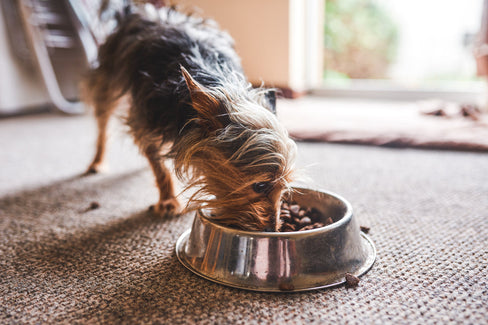
Dogs are enthusiastic eaters. Many will happily consume more food than they need.
Overfeeding during puppyhood increases body weight and accelerates growth, placing additional stress on developing joints. In adulthood, excess calories contribute to obesity—one of the most significant modifiable risk factors for hip dysplasia progression.
Work with your veterinarian to determine:
-
Appropriate daily caloric intake
-
Ideal body condition score
-
Feeding frequency
-
Portion sizes based on activity level
Feeding guidelines on packaging are starting points—not individualized plans.
Be Strategic With Food Types
Dry kibble formulated for large breeds is often ideal for maintaining appropriate calorie control and supporting dental health.
If your dog is a picky eater, you can mix in small amounts of canned food or dog-safe gravies to improve palatability—but be mindful of added calories. Canned foods can be more calorie-dense and may contain higher sugar or fat levels. The goal is consistency, portion control, and nutrient balance—not indulgence.
Go Easy on the Treats
Treats should account for no more than 10% of your dog’s daily caloric intake. Many commercial treats contain fillers, added sugars, and excess fat. Frequent high-calorie treats can quietly contribute to weight gain over time.
Instead:
-
Use small, low-calorie training treats
-
Break treats into smaller pieces
-
Substitute occasional treats with healthy options like small pieces of lean protein
Moderation is key.
Maintain Ideal Weight
Maintaining a lean body condition is one of the most powerful preventive measures available.
Excess weight:
-
Increases joint load
-
Accelerates cartilage wear
-
Elevates systemic inflammation
-
Reduces muscle efficiency
In contrast, lean dogs:
-
Experience less mechanical strain
-
Maintain stronger muscle support
-
Often show a slower progression of degenerative joint changes
Your veterinarian can help you assess your dog’s body condition score and adjust feeding or activity levels accordingly.
Begin Proactive Joint Support Early
For breeds at higher risk, proactive joint support can be beneficial—even before symptoms appear.
Joint supplements formulated with glucosamine, chondroitin, and MSM help support cartilage formation and joint integrity. Early supplementation may help maintain the structure of tissues such as cartilage, tendons, and ligaments as your dog grows and ages.
TRI-ACTA is formulated specifically for dogs needing proactive care for mobility concerns such as hip dysplasia. It contains two forms of glucosamine to support cartilage production, along with chondroitin and MSM. Starting joint support before severe degeneration develops may help delay onset and reduce long-term discomfort.
A proactive approach for developing and younger adult pets to maintain optimal joint health mobility, minimize inflammation and fend off age-related ailments.
TRI-ACTA for Pets

Exercise Your Dog Appropriately
Exercise strengthens muscles, improves joint stability, and helps maintain a healthy weight. However, the type and intensity of exercise matter—especially for growing large-breed puppies.
-
Warm Up First: Just like human athletes, dogs benefit from gradual warm-up activity before engaging in intense movement. Short, controlled walks before high-energy play can prepare muscles and reduce injury risk.
-
Train on Level Ground When Possible: Uneven terrain increases joint strain and instability. While unavoidable in certain environments (such as hunting), choosing level ground for routine exercise is ideal.
-
Avoid Overexertion: Dogs rarely self-regulate during play. Fetch sessions, agility drills, or high-speed chases can continue long past safe limits if allowed. Build in rest periods—even if your dog seems eager to continue.
-
Manage High-Speed “Zoomies”: Sudden, explosive sprinting and tight turns—often referred to as “zoomies”—can place significant stress on developing hips. While occasional bursts are normal, repeated high-speed, sharp-turn running on slippery surfaces increases injury risk.
-
Prioritize Low-Impact Consistency: Long, controlled walks, swimming, and moderate yard play provide excellent conditioning without excessive joint stress. Consistent, moderate exercise is more protective than sporadic intense activity.
Stages of Hip Dysplasia in Dogs
Hip dysplasia is not a condition that appears overnight. It develops progressively, often beginning in puppyhood and advancing over months or years. Understanding the stages of hip dysplasia helps pet owners recognize early warning signs and intervene before irreversible joint damage occurs.
|
Stage |
Key Physical Changes |
Common Signs & Symptoms |
|
1. Joint Laxity |
Looseness in the joint; "ball" doesn't fit tightly in the "socket." |
Occasional stiffness, slight gait changes, mild hesitation during play. |
|
2. Subluxation |
Partial dislocation; ball slips during movement; uneven joint pressure. |
"Bunny hopping," audible hip clicking, weakness in hind limbs, reluctance to climb. |
|
3. Cartilage Wear |
Shock-absorbing cartilage wears down; friction increases; inflammation begins. |
Difficulty rising, decreased range of motion, stiffness after exercise. |
|
4. Osteoarthritis |
Bone spurs (osteophytes) form; joint capsule thickens; chronic inflammation. |
Persistent lameness, muscle loss (atrophy) in hind limbs, irritability/withdrawal. |
|
5. Advanced Degeneration |
Severe deformity; flattened femoral head; shallow socket; eroded cartilage. |
Marked difficulty standing, severe lameness, significant loss of quality of life. |
1. Joint Laxity (Early Instability)
The earliest stage of hip dysplasia in dogs is joint laxity, meaning looseness within the hip joint. At this stage, the femoral head (the “ball”) does not fit tightly within the acetabulum (the “socket”). Instead, there is excessive movement during normal activity.
In young dogs, this instability may not immediately cause obvious pain. However, subtle signs can appear, such as:
-
Occasional stiffness after rest
-
Slightly abnormal gait
-
Mild hesitation when running or climbing
-
Reduced endurance during play
Because cartilage damage has not yet significantly developed, early detection at this stage offers the best opportunity for proactive management.
2. Subluxation (Partial Dislocation)
As instability progresses, the femoral head may begin to partially slip out of the socket during movement. This is known as subluxation. Subluxation increases mechanical stress across joint surfaces. Instead of smooth, evenly distributed contact, pressure becomes uneven and concentrated.
Dogs may begin to show more noticeable symptoms, including:
-
“Bunny hopping” when running
-
Audible clicking in the hips
-
Reluctance to jump or climb stairs
-
Noticeable weakness in the hind limbs
At this stage, inflammation often increases due to repeated microtrauma within the joint. Muscle tightness may develop as the body attempts to stabilize the unstable joint.
3. Cartilage Wear
With continued instability and abnormal motion, cartilage degeneration begins. Cartilage serves as a smooth, shock-absorbing surface within the joint. When it starts to wear down, friction increases. The joint becomes less efficient and more painful.
During this stage, dogs may experience:
-
Stiffness after exercise
-
Difficulty rising from lying down
-
Decreased range of motion
-
Reduced willingness to engage in activity
Inflammatory responses increase as cartilage breaks down. This further accelerates joint damage, creating a cycle of degeneration and inflammation.
4. Osteoarthritis Development
As cartilage loss continues, the body attempts to stabilize the joint by producing new bone around the joint margins. This results in osteoarthritis. The joint is no longer simply unstable—it is structurally altered.
At this stage:
-
Bone spurs (osteophytes) may form
-
The joint capsule thickens
-
Chronic inflammation becomes persistent
-
Pain becomes more consistent rather than occasional
Dogs with osteoarthritis often show:
-
Persistent lameness
-
Muscle loss in the hind limbs
-
Reduced activity levels
-
Behavioural changes such as irritability or withdrawal
5. Advanced Degeneration
In advanced hip dysplasia, the joint is severely deformed. The femoral head may become flattened, the socket shallow and irregular, and cartilage significantly eroded. Pain is often chronic and may worsen with weather changes or increased activity.
Signs at this stage can include:
-
Marked difficulty standing
-
Severe lameness
-
Limited mobility
-
Reduced quality of life
In severe cases, surgical intervention (such as total hip replacement or femoral head ostectomy) may be considered.
Why Early Intervention Matters
Hip dysplasia progresses from subtle instability to permanent structural degeneration. While genetics play a major role, early management—through controlled growth, appropriate exercise, weight management, and joint support—can significantly slow progression.
Addressing joint laxity before cartilage breakdown becomes severe offers the greatest opportunity to preserve long-term mobility and comfort.
General Treatment Measures for Hip Dysplasia in Dogs

Despite employing many preventative measures, Hip dysplasia may eventually occur. But all is not lost! Fortunately, it isn’t a life-threatening condition, and there are many treatment options available.
Non-Surgical Options:
-
Weight Reduction. If obesity was the cause or aggravator of hip dysplasia, reducing your dog’s weight can help alleviate symptoms and make your dog more comfortable.
-
NSAIDs. Non-Steroidal Anti-Inflammatory Drugs. These are used to reduce pain and inflammation in affected joints. These medications can be administered by mouth or through injection.
-
Physical Therapy. If the case of hip dysplasia isn’t too severe, physical therapy may be recommended. This can help your dog become more comfortable moving and reduce the pain and stiffness. Massages, most of which you can do at home, are often included when it comes to physical therapy.
-
Hip Brace. For mild to moderate cases, a hip brace may be recommended. This can help your dog keep mobile without the need for surgery. Hip braces have a combination of support and compression, which helps your dog to move more freely, and without pain.
-
Supplements. One of the most common treatment methods for hip dysplasia is supplementation. It’s often used in conjunction with other non-surgical and surgical methods. A good supplement with glucosamine and chondroitin sulfate supports and helps restore the painful joints associated with hip dysplasia.
If, over time, the condition worsens or isn’t caught early enough, a vet may recommend surgery. There are many surgical options available, depending on your dog’s health and their candidacy for surgery. However, there are several surgeries commonly used to correct hip dysplasia.
|
Surgical Method |
Procedure |
|
Double or Triple Osteotomy |
This procedure is best done only on younger dogs. It’s not suitable for older dogs that may have more brittle bones, or have developed arthritis. It involves cutting the hip joint in two or three places (hence double or triple) then rotating the joint so that it fits better with the femoral head. |
|
Femoral Head Ostectomy (FHO) |
This surgery is best performed on younger dogs but can be performed on mature ones as well. It involves removing the ball of the hip. That in turn makes the body create a false joint. This procedure doesn’t restore normal hip function, however, it is a successful strategy for pain management. |
|
Full Hip Replacement (FHR) |
This is when the entire hip joint—ball and socket—is removed, and replaced with an artificial hip joint. |
Depending on the surgery performed, recovery can be lengthy, from 4 weeks for younger dogs to 12 weeks for more mature dogs. In this timeframe, it’s important that your dog gets sufficient rest, with minimal exercise, according to the doctor’s orders.
Surgery typically requires pre-, as well as post-operative care. Along with the medications recommended and prescribed by your veterinarian, supplements such as TRI-ACTA H.A. can help make recovery more comfortable for your beloved pet. It helps replenish the necessary tissues and synovial fluid needed for your dog to walk, and even run comfortably again.
Our maximum strength formula is optimally designed to accelerate the formation of cartilage, minimize inflammation, expedite the healing process, and improve joint conditions.
TRI-ACTA H.A. for Pets

FAQ: Quick Answers About Dog Hip Dysplasia
Is hip dysplasia in dogs painful?
Yes, hip dysplasia can be painful—but the level of discomfort depends on the stage and severity of the condition. In the early stages (joint laxity), pain may be mild or intermittent. Dogs might simply appear stiff after rest or less enthusiastic about running and jumping. As the condition progresses and cartilage wears down, inflammation increases. This is when discomfort becomes more noticeable.
In advanced stages involving osteoarthritis and joint degeneration, pain can become chronic. Dogs may struggle to stand, hesitate on stairs, or show muscle loss in the hind legs due to reduced use. Because dogs instinctively mask pain, subtle behavioral changes—like reduced activity, irritability, or reluctance to play—can be important clues.
Can hip dysplasia be cured in dogs?
Hip dysplasia cannot be “cured” in the traditional sense, especially once structural changes to the joint have occurred. However, it can often be effectively managed.
Management strategies may include:
-
Weight control to reduce joint load
-
Structured, low-impact exercise
-
Physical therapy
-
Anti-inflammatory support (natural or prescription)
-
Joint supplementation to support cartilage integrity
-
Surgical intervention in severe cases
In young dogs diagnosed early, certain surgical procedures may significantly improve long-term outcomes. In adult dogs, the focus shifts toward slowing progression, reducing inflammation, and maintaining mobility. The goal is not reversal—it is preservation of comfort and function.
Would physical therapy help my dog with hip dysplasia?
Yes, physical therapy can be extremely beneficial for dogs with hip dysplasia.
Therapeutic approaches such as:
-
Controlled strengthening exercises
-
Underwater treadmill therapy
-
Range-of-motion work
-
Laser therapy
-
Massage and manual therapy
can improve muscle support around the hip joint. Stronger muscles help stabilize the joint, reducing mechanical stress and improving function.
Physical therapy can also:
-
Improve flexibility
-
Reduce stiffness
-
Support post-surgical recovery
-
Enhance overall mobility and quality of life
For many dogs, combining physical therapy with weight management, anti-inflammatory strategies, and joint supplementation provides the most comprehensive long-term plan.
As always, consult your veterinarian before beginning a new therapy program to ensure it is appropriate for your dog’s condition and disease stage.
How To Help Your Dog With Hip Dysplasia Now
Hip dysplasia dogs. It’s an unfortunate occurrence among larger and some select smaller breeds of dogs. Fortunately, it’s not a life-threatening condition, and your precious pooch can still live a long, healthy, happy life!
You’ve already taken the first step, which is educating yourself on what hip dysplasia is, as well as how you can prevent and treat your dog so that they can have the best quality of life possible.
The next step is to make sure to stay vigilant. Be aware of any signs or symptoms that your dog may be suffering from hip dysplasia – this can occur even in young puppies. If you notice any symptoms develop, make sure that you visit your veterinarian immediately.
Feeding a top-notch supplement can also be a game-changer when it comes to your dog’s hip health.
Purchase TRI-ACTA or TRI-ACTA H.A. online or learn where to buy at a store near you.
Our maximum strength formula is optimally designed to accelerate the formation of cartilage, minimize inflammation, expedite the healing process, and improve joint conditions.
TRI-ACTA H.A. for Pets
Share this post:


Proactive & Therapeutic Joint Supplements

When given daily, Integricare joint supplements recover bone and joint injuries faster and help prevent mobility injuries from happening in the first place.